
Bali is well known for its rich cultural heritage, traditional ceremonies and spiritual way of life. Beyond its beautiful landscapes and famous temples, the island preserves many customs that remain an important part of everyday community life. One of these traditions is Mepeed, a ceremonial procession that reflects the devotion, togetherness and cultural identity of Balinese Hindu communities.
In Sebatu Village, located in the Tegalalang area of Gianyar, Bali, Mepeed is known locally as Mepade Agung. This traditional procession is closely associated with important temple ceremonies, particularly Piodalan, the anniversary celebration of a Hindu temple.
During the procession, villagers walk together towards the temple, creating a meaningful moment that brings the community together through prayer, offerings and shared cultural responsibilities.
For visitors interested in understanding authentic Balinese culture, witnessing the Mepeed tradition in Sebatu Village offers an opportunity to appreciate the spiritual values and community traditions that continue to shape local life.
What Is the Mepeed Tradition in Bali?
Mepeed is a traditional Balinese ceremonial procession in which community members walk together in an organized line as part of a religious ceremony.
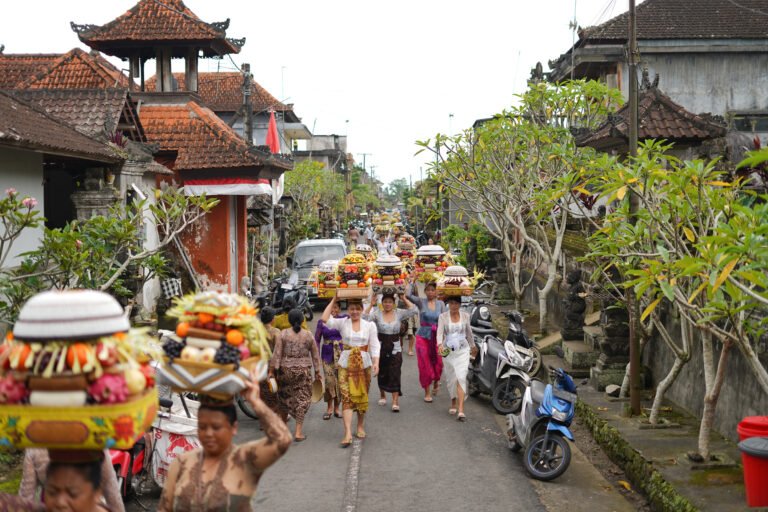
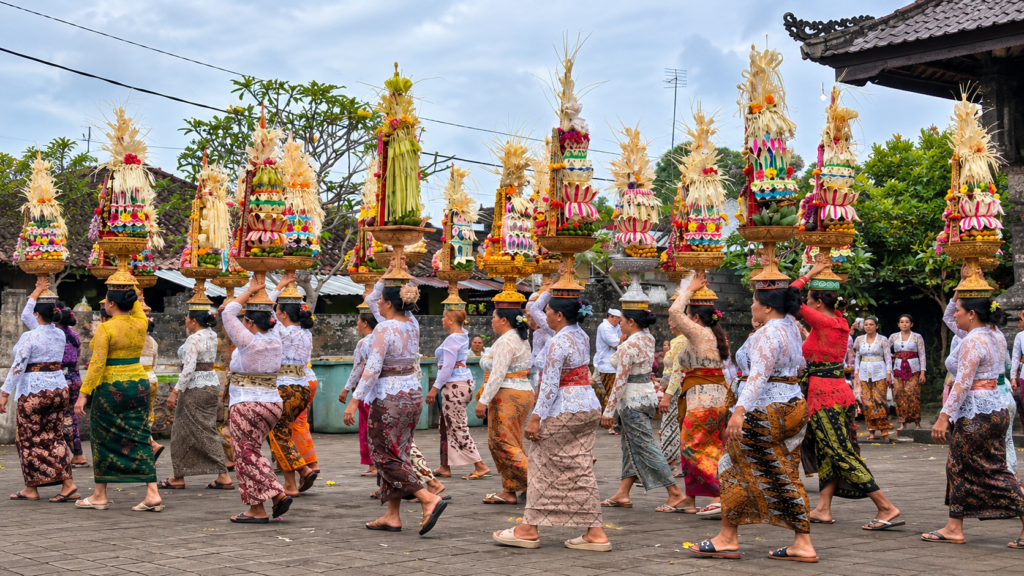
The term is commonly associated with the act of walking in a procession. In many Balinese communities, women participate by carrying traditional offerings, often known as Gebogan, arranged with fruits, flowers and traditional cakes.
These offerings represent devotion and gratitude to Ida Sang Hyang Widhi Wasa, the supreme deity in Balinese Hindu belief.
Mepeed is not simply a cultural parade or public performance. It is part of a religious tradition that expresses faith, respect and the community’s relationship with the divine.
Although the general practice can be found in different parts of Bali, its arrangements, clothing, participants and ceremonial details may vary according to the customs of each traditional village.
Mepade Agung: The Mepeed Tradition in Sebatu Village
In Sebatu Village, the Mepeed procession is also known as Mepade Agung. It forms part of the village’s traditional religious life and is associated with important temple ceremonies.
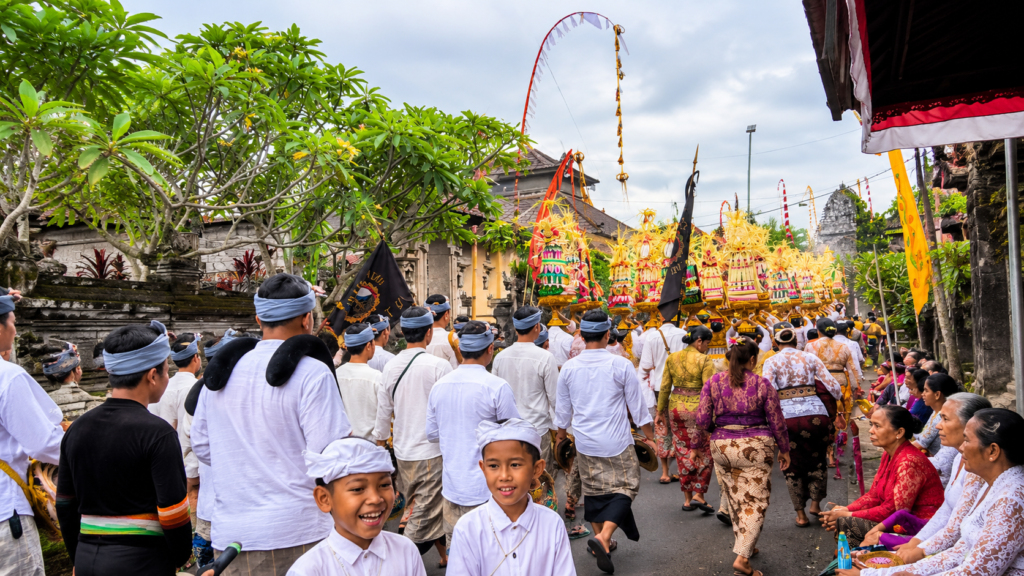
During a Piodalan celebration, villagers gather and walk together towards the temple while carrying ceremonial offerings. The procession is commonly led by women wearing traditional Balinese attire.
Their graceful movements and orderly formation create a distinctive cultural scene along the village pathways.
However, the importance of Mepade Agung goes beyond its visual beauty. The tradition represents the collective devotion of the village community and reflects the values of respect, cooperation and spiritual harmony.
For the people of Sebatu, participating in traditional ceremonies is also a way of maintaining connections with their ancestors and passing cultural knowledge to younger generations.
The Meaning and Symbolism Behind the Mepeed Procession
The Mepeed tradition carries several cultural and spiritual values that remain meaningful in Balinese society.
1. Devotion and Gratitude
The offerings carried during the procession represent an expression of gratitude and devotion.
Through the ceremonial preparations and participation, villagers express appreciation for the blessings they receive and maintain their spiritual relationship with Ida Sang Hyang Widhi Wasa.
2. Community Unity and Togetherness
Mepeed brings members of the village together in a shared religious activity.
Families and community groups contribute to the preparations, while participants walk together as part of the ceremony. This collective involvement reflects the importance of cooperation and social harmony in Balinese village life.
3. Respect for Cultural Heritage
The continuation of Mepeed demonstrates how traditional customs remain an important part of Balinese identity.
By participating in ceremonies and maintaining inherited practices, local communities help introduce younger generations to their cultural responsibilities and heritage.
4. Spiritual Harmony
The procession reflects the relationship between religious belief, community life and cultural practices.
These values are closely connected to the Balinese philosophy of Tri Hita Karana, which emphasizes harmony between humans and God, humans and one another, and humans and the natural environment.
Traditional Attire and Offerings During Mepeed
One of the most recognizable aspects of a Mepeed procession is the traditional Balinese attire worn by participants.
Women commonly wear traditional kebaya, kamen (traditional cloth), and a sash as part of their ceremonial clothing. The colors and specific clothing arrangements depend on the customs and requirements of the ceremony.
Another important element is the offering, which may include Gebogan.
Gebogan is a decorative arrangement of fruits, flowers and traditional food, carefully prepared as a religious offering. In communities where it forms part of the Mepeed procession, it is traditionally carried on the head using a supporting tray.
Preparing these offerings requires care, creativity and cooperation among family and community members.
Together, the traditional attire and offerings represent the beauty of Balinese ceremonial practices while maintaining their deeper religious significance.
When Does the Mepeed Tradition Take Place?
Mepeed is generally associated with important religious ceremonies, particularly Piodalan, which marks the anniversary of a Hindu temple.
In Bali, temple anniversaries follow the Balinese traditional calendar. Many temples observe Piodalan every 210 days, although the schedule and ceremonial arrangements depend on the temple’s particular tradition.
In Sebatu Village, the timing of Mepade Agung follows the relevant temple ceremony and local customary arrangements.
For this reason, visitors should not expect to see the procession every day. Anyone interested in witnessing the tradition should ask local community members or village representatives about upcoming ceremonial activities.
Experiencing the Cultural Heritage of Sebatu Village
Sebatu Village offers more than beautiful natural scenery. It is also a place where Balinese traditions, religious activities and community life continue to develop together.
Visitors can discover different aspects of local culture through experiences that introduce them to traditional knowledge and everyday village activities.
Some cultural experiences to explore include:
Making Canang Sari
Canang Sari is one of the most recognizable daily offerings in Bali. Visitors can learn about its basic components, traditional preparation and meaning in Balinese Hindu culture. For more information discover making canang sari experience at Puri Gangga Resort.
Making Gebogan
Discover the art of arranging fruits, flowers and traditional decorations into a Gebogan, an offering commonly associated with larger religious ceremonies.
Exploring Sebatu Village
A village tour offers opportunities to discover local surroundings, meet community members and understand how traditional customs remain connected to everyday life.
Discovering Local Religious Traditions
Visitors can learn about the role of temples, ceremonial preparations and community participation in maintaining Balinese spiritual and cultural heritage.
These experiences provide a deeper understanding of the cultural environment that makes Sebatu Village distinctive.Discover the surroundings of Sebatu Village through a guided village tour.
How Visitors Can Respect the Mepeed Tradition
Mepeed is a religious activity, so visitors who have the opportunity to witness the procession should approach it with respect.
Here are some simple guidelines:
- Observe the procession quietly and respectfully.
- Wear appropriate clothing when visiting temple areas.
- Follow instructions from local community members and temple representatives.
- Ask permission before taking close-up photographs of participants.
- Avoid blocking the procession or interfering with ceremonial activities.
- Do not touch or move religious offerings.
- Follow temple regulations, including any restrictions on photography.
Understanding these simple guidelines helps ensure that visitors appreciate the tradition without disturbing its religious significance.
Discover the Cultural Heritage of Sebatu Village with Sebatu Village Life
The Mepeed tradition is one example of how Balinese culture continues to live through religious ceremonies, community participation and inherited customs.
In Sebatu Village, Mepade Agung reflects the importance of devotion, unity and respect for cultural heritage. It reminds us that Balinese traditions are not simply performances for visitors but meaningful practices that remain connected to the spiritual and social life of the community.
Through Sebatu Village Life, visitors can discover more about the traditions, local experiences and cultural heritage that make Sebatu a special destination in Bali.
Explore the village, learn from local communities and experience the cultural richness of Bali beyond the usual tourist attractions.
Frequently Asked Questions (FAQ)
1. What is the Mepeed tradition in Bali?
Mepeed is a traditional Balinese religious procession in which community members walk together as part of a ceremonial activity. In many villages, women carry offerings such as Gebogan as an expression of devotion and gratitude.
2. What is Mepade Agung in Sebatu Village?
Mepade Agung is the local name associated with the Mepeed tradition in Sebatu Village. It is connected with important temple ceremonies and represents community devotion and togetherness.
3. What is the purpose of the Mepeed ceremony?
The tradition expresses religious devotion, gratitude and respect for Ida Sang Hyang Widhi Wasa. It also strengthens community unity and helps preserve Balinese cultural heritage.
4. What do women carry during the Mepeed procession?
In many Balinese communities, women carry Gebogan, decorative offerings made from fruits, flowers and traditional cakes. The exact ceremonial arrangements can differ between villages.
5. When can visitors see the Mepeed procession in Sebatu Village?
The procession is associated with particular temple ceremonies, including Piodalan. Its schedule depends on the temple’s ceremonial calendar and local customary arrangements, so visitors should check with local community members.
6. Can tourists watch the Mepeed tradition in Sebatu Village?
Visitors may be able to observe the procession when it takes place, provided that the ceremony and local community arrangements allow it. They should maintain a respectful distance and follow local instructions.
7. What other cultural experiences can visitors enjoy in Sebatu Village?
Visitors can discover local activities such as making Canang Sari, preparing Gebogan, joining a village tour and learning about traditional Balinese customs and community life.
Stay at Puri Gangga Resort and Discover the Cultural Life of Sebatu Village
For travelers who wish to experience the authentic cultural atmosphere of Bali, staying in Sebatu Village offers an opportunity to discover a different side of the island.
Located in the heart of Sebatu Village, Puri Gangga Resort Ubud provides a peaceful retreat surrounded by lush rice terraces, tropical landscapes and the living traditions of the local Balinese community.