
Sebatu vs Tirta Empul: Which Purification Experience Is Right for You?
If you are planning a cultural or spiritual journey through Bali, Sebatu and Tirta Empul may appear to offer a similar experience. Both are associated with sacred water, Balinese Hindu traditions, and melukat, a ritual of purification. Both are also located in the highlands of Gianyar, within reach of Ubud.
But the experience of visiting them is not quite the same.
Tirta Empul is one of Bali’s most recognised sacred water temples, known for its ancient spring, purification pools, temple architecture, and long history of religious practice. Sebatu offers a different perspective. Here, sacred water is part of a wider village landscape, where temples, springs, rice fields, ceremonies, and everyday community life remain closely connected.
So the question is not simply, “Is Sebatu better than Tirta Empul?”
A more useful question is:
What kind of Balinese purification experience are you looking for?
Sebatu vs Tirta Empul at a Glance
| Sebatu | Tirta Empul | |
|---|---|---|
| Setting | Living village surrounded by nature | Large and established sacred temple complex |
| Known for | Sacred springs, village life, purification and spiritual experiences | Famous holy spring and purification pools |
| Purification | Sacred water sites within Sebatu | Iconic purification pools within the temple |
| Atmosphere | Quiet, intimate and connected to village surroundings | More established and frequently visited |
| Cultural experience | Village traditions, nature, temples and daily life | Major temple heritage and religious architecture |
| Best suited to | Travelers seeking a slower, village-based experience | Travelers wanting to experience a famous Balinese water temple |
| Ideal approach | Slow down and explore beyond the ritual | Explore the temple and its sacred water tradition |
The comparison is therefore less about choosing a winner and more about understanding two different expressions of Bali’s sacred-water tradition.
What Is Tirta Empul Known For?
Located in Manukaya Village near Tampaksiring, Tirta Empul is one of Bali’s most important sacred water temples.
According to Indonesia Travel’s guide to Pura Tirta Empul, the temple is associated with a natural sacred spring and is widely known for melukat, the Balinese Hindu ritual of purification. The temple is believed to date to around the 10th century and remains an active place of worship today.
The most recognisable part of the experience is the purification pool, where worshippers enter the water and move from one fountain to another as part of the melukat ritual.
The site has a clear architectural and ritual structure, with courtyards, shrines and sacred bathing areas. The purification pools are fed by the temple’s sacred spring.
For many international visitors, Tirta Empul provides an accessible introduction to Bali’s sacred-water traditions.
It is also important to remember that Tirta Empul is first and foremost a living Hindu place of worship, rather than simply a tourist attraction. Visitors are expected to follow temple rules and behave respectfully while religious activities are taking place.
What Makes Sebatu Different?
Sebatu’s character is easier to understand when you look beyond one temple.
The village is home to several sacred water sites, including Pura Gunung Kawi Sebatu and Pasiraman Dalem Pingit, both associated with purification and spiritual practice.
But the significance of Sebatu does not end at the spring.
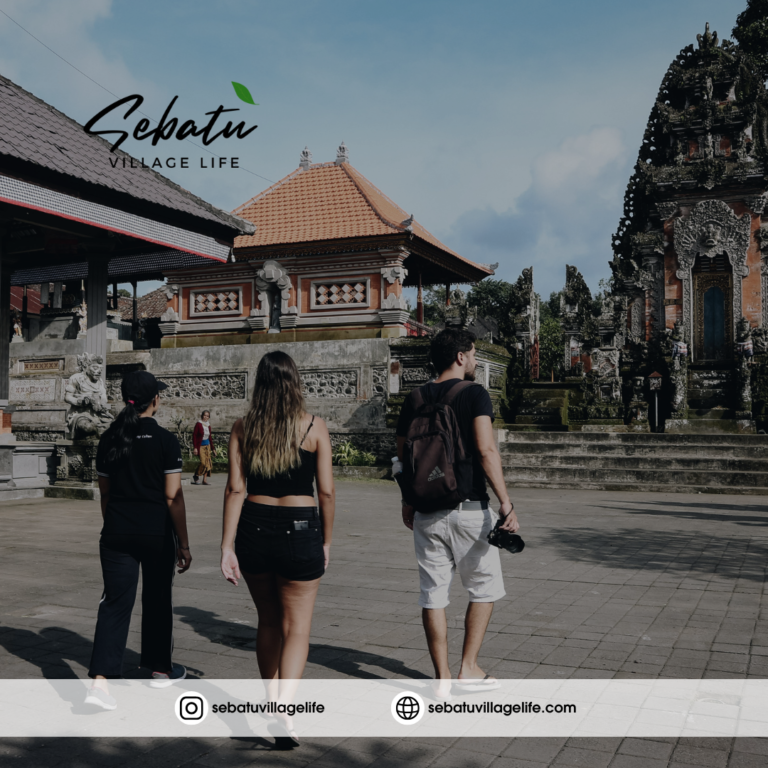
The sacred sites sit within a broader landscape of rice fields, tropical vegetation, village pathways, temples, family compounds, agricultural areas, and community activities.
This creates a different rhythm.
Rather than experiencing purification as one stop on a sightseeing itinerary, visitors can understand it as one part of a living village environment.
That distinction is central to the idea of Sebatu Village Life.
Sebatu or Tirta Empul for Melukat?
Both destinations can be associated with melukat, but the surrounding experience can feel quite different.
At Tirta Empul, the purification ritual is closely associated with the temple’s famous bathing pools and sequence of water spouts. The site has become internationally recognised because visitors can witness and participate in this long-standing practice under the appropriate temple guidelines.
At Sebatu, purification can take place at sacred water sites such as Pura Gunung Kawi Sebatu or Pasiraman Dalem Pingit.
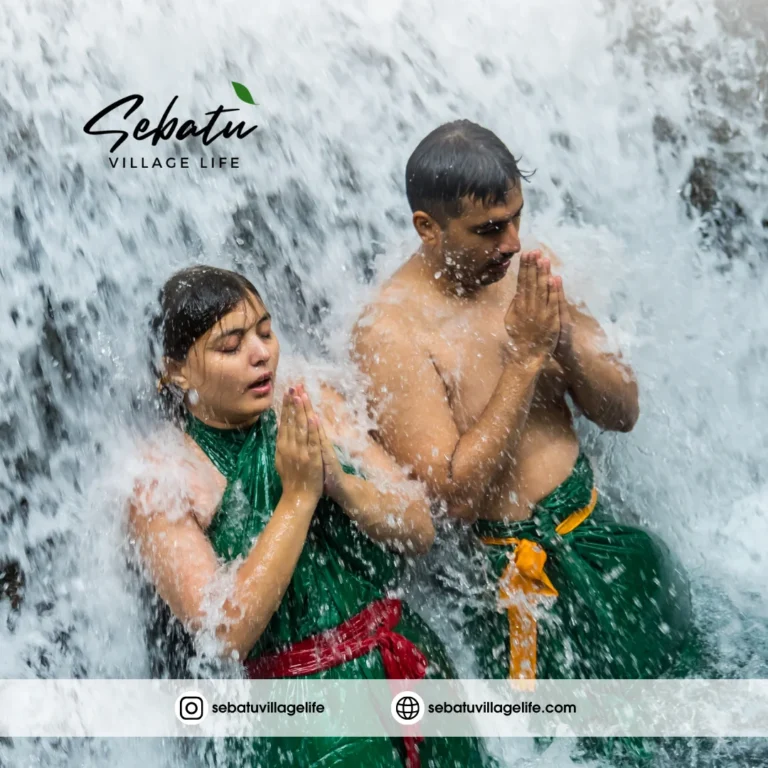
At Pura Gunung Kawi Sebatu, the ritual takes place within a temple environment shaped by natural springs, greenery and the surrounding village. The experience involves preparation, prayer, holy-water cleansing and reflection.
This creates an important distinction:
At Tirta Empul, the sacred water temple is the destination. In Sebatu, the sacred water experience can become a doorway into the wider life of the village.
The Difference Is More Than Crowds
It would be easy to reduce the comparison to:
Tirta Empul = busy
Sebatu = quiet
But that would be too simplistic.
The more meaningful difference is the context in which you experience the ritual.
Tirta Empul is a major cultural landmark. Its historical importance, architecture and purification pools have made it one of Bali’s most recognisable sacred-water destinations.
Sebatu offers a more dispersed experience, where sacred water exists alongside village life.
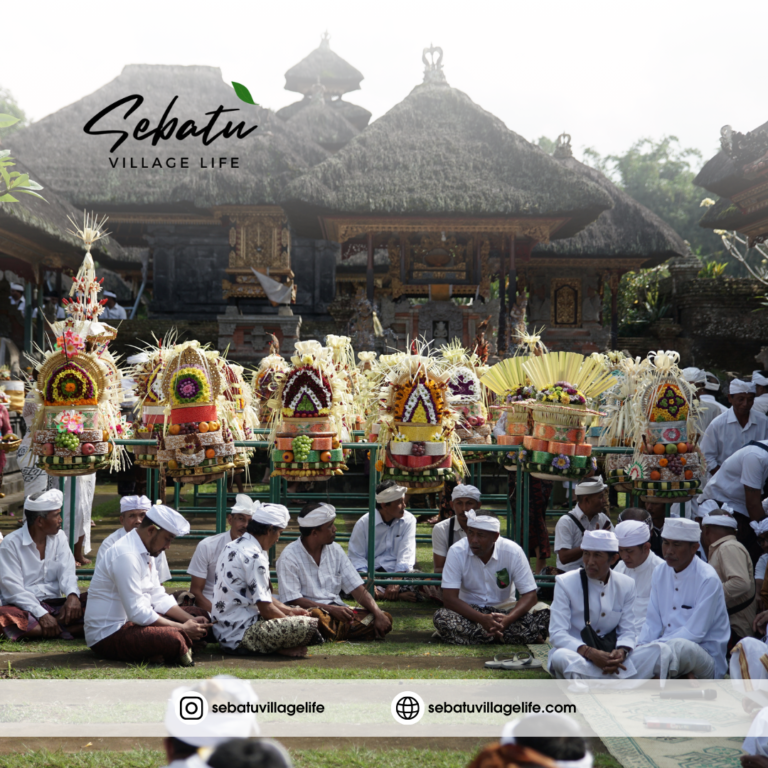
You can visit a temple, walk through rice fields, observe local ceremonies, encounter traditional offerings, explore village paths and spend time simply being present in the landscape.
The experience becomes less about checking off a temple and more about understanding the relationship between:
water → temple → people → nature → ritual → daily life
This relationship between water, nature, agriculture, community and spirituality is deeply embedded in Bali’s cultural landscape. UNESCO’s Cultural Landscape of Bali Province explains how the subak system connects water management, rice cultivation, temples and the Balinese philosophy of Tri Hita Karana, bringing together the spiritual, human and natural worlds.
That broader context is what makes Sebatu particularly interesting for travellers who want to go deeper into Balinese culture.
Sebatu Is More Than a Purification Destination
Purification is an important part of Sebatu’s identity, but it should not become the entire story.
The village has a broader cultural landscape.
Visitors can explore Sebatu Village Life through nature walks, cycling, village experiences, meditation, ceremonies and other activities that reveal how culture continues beyond temple walls.
This matters because Balinese spirituality is not separated neatly from everyday life.
Offerings, ceremonies, agriculture, water management, family life and temple responsibilities are interconnected.
The wider Balinese cultural landscape reflects this relationship between nature, water, agriculture, community and spirituality. UNESCO recognises this interconnected relationship through Bali’s cultural landscape and subak tradition.
Sebatu allows visitors to encounter some of these relationships at a village scale.
Which Is Better: Sebatu or Tirta Empul?
There is no universal answer.
It depends on what you want from your Bali experience.
Choose Tirta Empul if you want:
- To visit one of Bali’s most famous sacred water temples
- To experience its historic purification pools
- To learn about a major Hindu temple complex
- To see one of Bali’s most recognisable cultural landmarks
- A well-known introduction to melukat and sacred water traditions
Choose Sebatu if you want:
- A quieter village environment
- Sacred water surrounded by nature
- To experience purification within a broader village context
- To explore beyond a single temple
- More time for reflection and slowing down
- To understand how spirituality connects with everyday village life
And there is no reason you cannot experience both.
In fact, visiting both may give you a more complete understanding of how sacred water and purification are experienced in Bali.
What If You Have Already Visited Tirta Empul?
This is where Sebatu becomes particularly interesting.
If you have already experienced Tirta Empul, visiting Sebatu does not necessarily mean repeating the same experience.
Instead, Sebatu can offer a different perspective.
Rather than another famous temple on your itinerary, you can spend more time exploring the village around the sacred sites.
Walk through the countryside.
Observe the relationship between water and agriculture.
Visit another purification site.
Learn about local ceremonies.
Sit quietly after the ritual.
Have a meal overlooking the rice fields.
Or simply allow yourself to move more slowly.
This is the philosophy behind Sebatu Village Life: the village itself becomes part of the experience.
What to Do After Purification in Sebatu
One advantage of experiencing Sebatu slowly is that the purification ritual does not have to be the end of your visit.
It can be the beginning.
After visiting a sacred spring, you might continue with a walk through the village or surrounding rice fields.
For travellers staying nearby, a longer stay allows even more space for reflection and exploration. Puri Gangga Resort is located in Sebatu and offers access to village walks, cycling, cultural experiences, yoga and purification experiences.
You can also make the day part of a slower wellness journey.
After time in the sacred water, a traditional treatment at Dewi Gangga Spa can provide a natural transition from spiritual reflection to physical relaxation. The spa combines Balinese treatments with the natural setting of Sebatu.
And when it is time to eat, Kailasha Restaurant offers Balinese and Indonesian cuisine in a setting overlooking Pura Gunung Kawi Sebatu and the surrounding rice terraces.
Together, these experiences make it possible to turn a short purification visit into a broader Sebatu Village experience.
A Different Way to Experience Bali
Perhaps the most useful way to think about Sebatu and Tirta Empul is not as competitors.
They represent two different entry points into Bali’s sacred relationship with water.
Tirta Empul offers the experience of entering one of Bali’s most important and recognisable sacred-water temples.
Sebatu offers another possibility: experiencing purification within the slower rhythm of a living village.
One is not necessarily better than the other.
They simply invite you to pay attention to different things.
At Tirta Empul, you may remember the temple, the fountains and the sacred pools.
In Sebatu, you may remember the water — but also the rice fields, the forest, the sound of the village, the offerings, the people, and the quiet moments before and after the ritual.
And perhaps that is the real difference.
Tirta Empul is a place you come to experience a sacred water temple. Sebatu is a place where sacred water can lead you into village life.
Frequently Asked Questions
Is Sebatu better than Tirta Empul for purification?
Neither is universally better. Tirta Empul is a major and highly recognised sacred-water temple, while Sebatu offers purification within a quieter village environment with several sacred water sites.
What is the difference between Sebatu and Tirta Empul?
The main difference is context. Tirta Empul is centred around a famous sacred temple complex and its purification pools. Sebatu offers purification alongside village life, nature, temples and other cultural experiences.
Can foreigners do Melukat in Sebatu?
Visitors may participate in purification experiences in Sebatu when the site and local customs allow it. Participants should follow temple rules, dress appropriately and approach the ritual respectfully. A local guide can help visitors understand the correct procedure and cultural etiquette.
Is Sebatu less crowded than Tirta Empul?
Sebatu generally offers a quieter village atmosphere, but conditions can vary depending on the temple, ceremony calendar, time of day and season. It is better to think of Sebatu as a different type of destination, rather than assuming it will always be empty.
Where can I do purification in Sebatu?
Two notable sites are Pura Gunung Kawi Sebatu and Pasiraman Dalem Pingit, both associated with sacred water and purification practices.
Can I visit Sebatu and Tirta Empul on the same trip?
Yes. They are close enough to combine into a broader cultural itinerary around the highlands of Gianyar. Visiting both can help you understand the different ways sacred water and purification are experienced in Bali.
How long should I spend in Sebatu?
A few hours can introduce you to the temples and purification sites, but staying longer allows you to experience other aspects of village life, including nature walks, dining, wellness and cultural activities.
What should I wear for purification in Sebatu?
Dress modestly and follow the requirements of the particular temple or purification site. A sarong and sash are generally required for temple participation. When joining a ritual, local guidance should take precedence over general travel advice.
Experience Sebatu Beyond the Temple
A purification ritual can be a meaningful reason to come to Sebatu.
But it does not have to be the only reason you stay.
Explore the village, walk through its natural landscape, learn about its ceremonies, eat local food, rest, and allow yourself enough time to notice the quieter details.
Because Sebatu Village Life is not simply about visiting a sacred place.
It is about discovering how water, nature, spirituality and community continue to shape everyday life in a Balinese village.