
Imagine standing beneath a natural waterfall in Bali, surrounded by lush tropical greenery. Clear water flows over your body, yet something unexpected may happen: the water beneath you appears to change colour. Sometimes it looks milky white, sometimes yellowish like tea, and on other occasions, reddish.
This unusual phenomenon is one of the stories that makes Pesiraman Dalem Pingit in Sebatu Village, Gianyar, particularly fascinating.
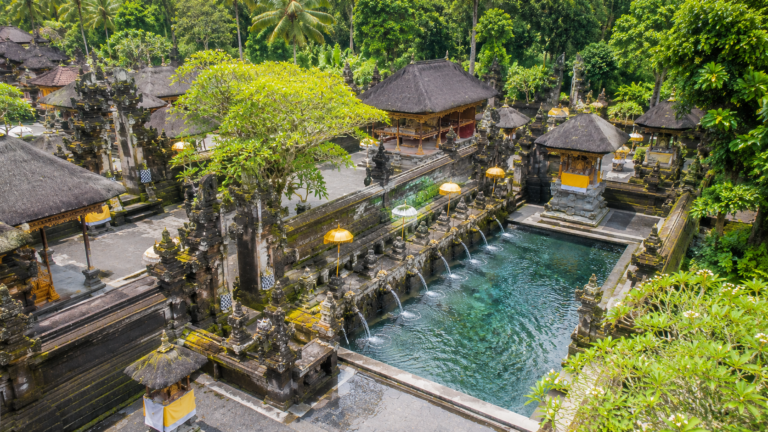
Known as a sacred place for Melukat, a traditional Balinese Hindu purification ritual, Pesiraman Dalem Pingit is more than a natural waterfall. It is a place where local beliefs, spiritual traditions, and stories of mysterious experiences come together.
For generations, water has held an important place in Balinese Hindu culture. At this sacred spring, the changing appearance of water has become part of the local spiritual narrative, attracting devotees and curious visitors who want to understand the story behind it.
But why does the water sometimes appear to change colour? What do the different colours mean according to local beliefs? And how did this unusual phenomenon first become known in Sebatu?
Let’s explore the story behind one of Sebatu Village’s most intriguing sacred places.
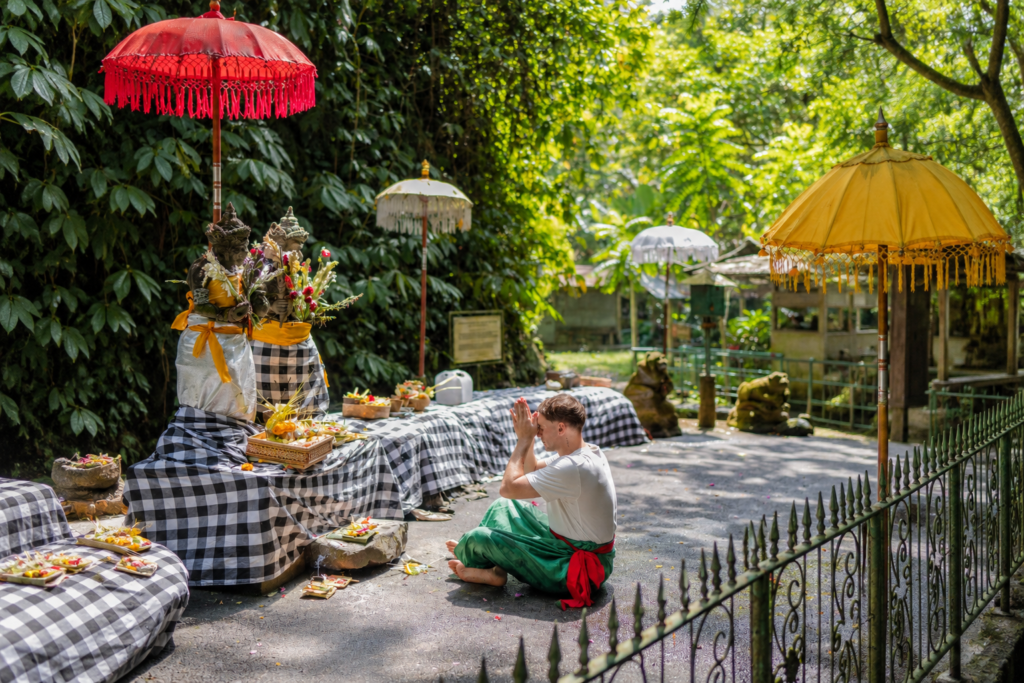
The Story Behind the Changing Water Colours
The story of the changing water colours at Pesiraman Dalem Pingit dates back to 19 November 2007.
According to local accounts, a foreign visitor exploring the natural surroundings of Sebatu Village discovered a small waterfall with clear, refreshing water. Attracted by its peaceful atmosphere, the visitor decided to bathe beneath the flowing water.
However, something unexpected reportedly happened during the experience. The water, which had initially appeared clear, suddenly became cloudy, resembling water used to wash rice.
Surprised and frightened by the unusual change, the visitor quickly left the waterfall and shared the experience with the local community.
The story soon attracted the attention of village elders and religious figures, who wanted to understand the significance of the place.
Following discussions among the local community, a special ceremony was held on 24 November 2007, coinciding with the Balinese Hindu holy day of Tumpek Landep.
According to the local spiritual account, the ceremony revealed a connection with Dewi Uma and Dewi Gangga, divine figures associated with sacred energy and water.
Following this event, sacred shrines known as Pelinggih were established around the area, and the location became increasingly recognized as Pesiraman Dalem Pingit Sebatu.
What began as a little-known natural waterfall gradually became an important place for spiritual purification and religious activities.
What Colours Can the Water Become?
One of the most fascinating aspects of Pesiraman Dalem Pingit is the variety of water colours reported by visitors and local religious caretakers.
Although the water generally appears clear, several different colours have reportedly been observed during Melukat.
1. Milky White: Like Rice-Washing Water
One of the most frequently mentioned changes is the appearance of cloudy white water, resembling water used to wash rice.
This colour is particularly associated with the original story from November 2007, when the unusual phenomenon first attracted attention.
According to local beliefs, this change may be interpreted as a sign connected to spiritual purification.
For devotees, the experience is sometimes understood as part of the process of releasing negative influences during Melukat.
However, this interpretation belongs to the local spiritual belief system and should not be considered a scientifically established explanation.
2. Yellowish Water: Like Tea
Another reported colour is a cloudy yellowish appearance, sometimes compared to the colour of tea.
In local spiritual accounts, this change is also associated with the condition of the person undergoing purification.
Some visitors interpret the experience as a sign of spiritual cleansing, although there is no universally established meaning for this particular colour.
The local religious caretaker has also been reported as avoiding definitive interpretations of the phenomenon.
3. Reddish Water: An Unusual Appearance
A reddish appearance has also been mentioned in accounts of the sacred spring.
Some reports describe it as resembling a reddish or blood-like colour.
This unusual appearance has contributed to the mystery surrounding Pesiraman Dalem Pingit and has become part of the stories shared by devotees and local residents.
According to local beliefs, it may carry spiritual significance, but its precise meaning is not definitively established.
4. Clear Water: The Natural Appearance
Not every visitor experiences a visible change in the water.
In many instances, the water remains clear and appears as a natural flowing spring.
Local accounts also mention that the visibility of the colour changes may vary. Sometimes the difference is noticeable, while at other times it is not observed.
This variation is part of what makes the story of Pesiraman Dalem Pingit particularly intriguing.
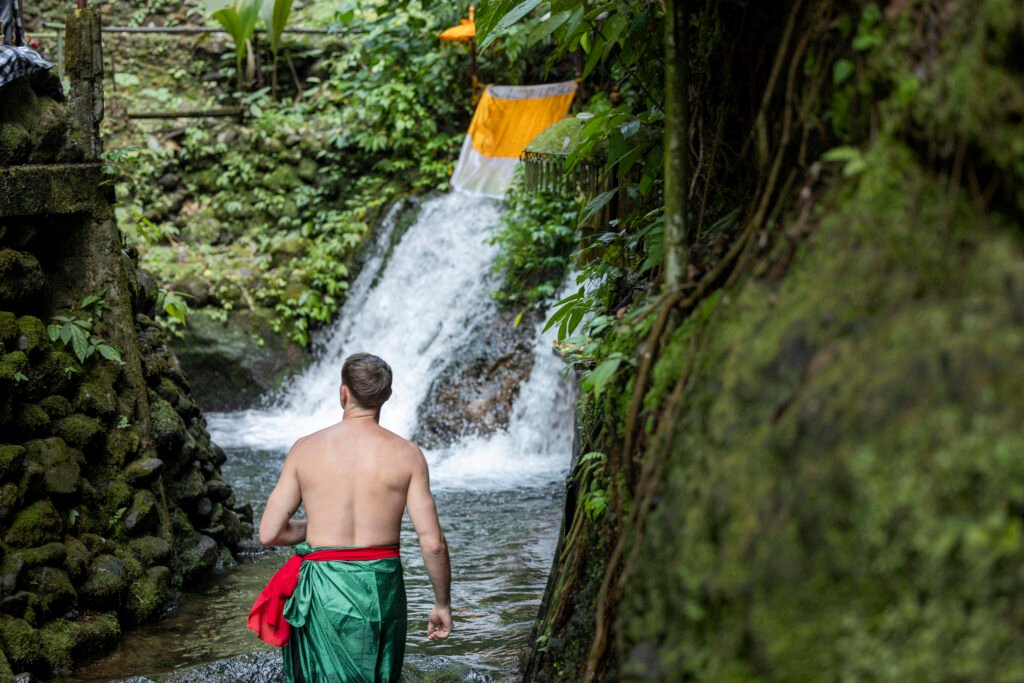
What Does the Changing Water Colour Mean According to Balinese Beliefs?
In Balinese Hindu culture, water is more than an essential element of nature. It also carries deep religious and spiritual significance.
Holy water, commonly known as Tirta, is used in various ceremonies and purification practices. It symbolizes purity, blessings, and spiritual harmony.
At Pesiraman Dalem Pingit, some local devotees believe that changes in the water’s appearance during Melukat may reflect spiritual conditions associated with the person undergoing purification.
According to these beliefs, negative influences may be released through the purification process, and the changing water colour is sometimes interpreted as a symbolic indication of this experience.
However, it is important to understand that this is a local spiritual interpretation rather than a proven physical or medical process.
Interestingly, accounts from the local religious caretaker indicate that the phenomenon has not been assigned a definitive meaning for each colour. The experience is regarded as something that cannot always be explained through ordinary reasoning.
This perspective reflects an important aspect of Balinese spirituality: not everything associated with sacred places is necessarily interpreted in the same way by every individual.
For many devotees, the most meaningful part of Melukat is not whether the water changes colour, but the intention to pray, seek inner peace, and restore spiritual balance.
The Connection Between Changing Water Colours and Melukat
To understand why the changing water phenomenon is meaningful to local devotees, it is helpful to understand Melukat itself.
Melukat is a traditional Balinese Hindu purification ritual performed to cleanse the mind and spirit.
The practice uses sacred water and is accompanied by prayer, offerings, and sincere spiritual intention.
At Pesiraman Dalem Pingit, the natural waterfall provides the setting for this traditional ceremony.
The experience generally involves several stages:
1. Preparing the Offerings
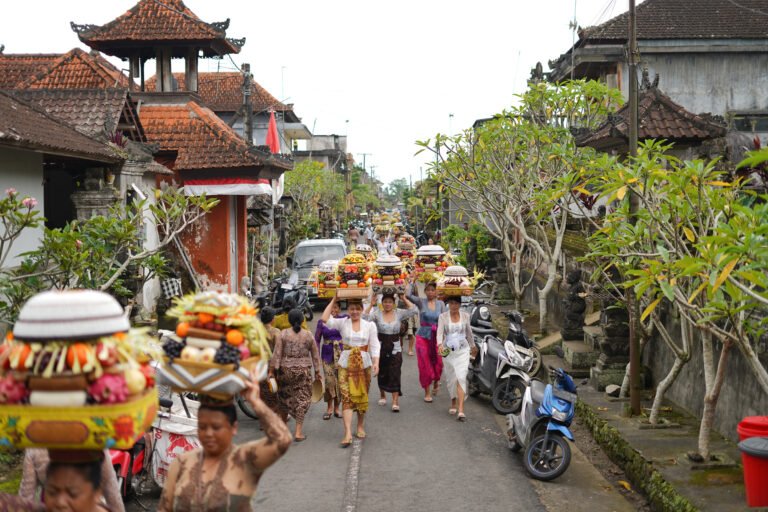
Devotees prepare traditional offerings such as Canang Sari, Kwangen, or Pejati, depending on the purpose of the ceremony.
2. Offering Prayers
Before entering the purification area, participants traditionally pray at designated shrines and present their offerings.
3. Performing the Water Purification
The participant enters the designated area and allows the flowing water to form part of the purification ritual, following the guidance of the local religious caretaker.
4. Completing the Ceremony
After the purification, devotees traditionally return to the shrine area for further prayers and to receive holy water and blessings.
The ritual is not simply about bathing beneath a waterfall. It is a religious practice that emphasizes devotion, reflection, and the intention to seek spiritual harmony.
For this reason, visitors should never treat the changing water phenomenon as entertainment or attempt to force a particular result.
Is There a Scientific Explanation for the Changing Water Colours?
The changing appearance of water at Pesiraman Dalem Pingit has attracted curiosity, particularly among visitors unfamiliar with the local spiritual traditions.
From a scientific perspective, water can appear cloudy or change colour due to several physical and environmental factors.
For example:
- Suspended sediments: Fine particles of soil, clay, or other natural materials can make water appear cloudy or milky.
- Mineral content: Naturally occurring minerals can influence the appearance and colour of water.
- Organic materials: Leaves and other organic matter may affect water clarity and colour.
- Light and surroundings: Reflections, shadows, and changes in lighting can alter how water appears to the human eye.
These are general scientific possibilities, not verified explanations for the phenomenon at Pesiraman Dalem Pingit.
There is currently no verified scientific investigation establishing the precise cause of the reported colour changes at this particular location.
This distinction is important because the local spiritual meaning of the phenomenon and its possible physical causes are two different perspectives.
Both can be discussed respectfully without presenting one as proof of the other.
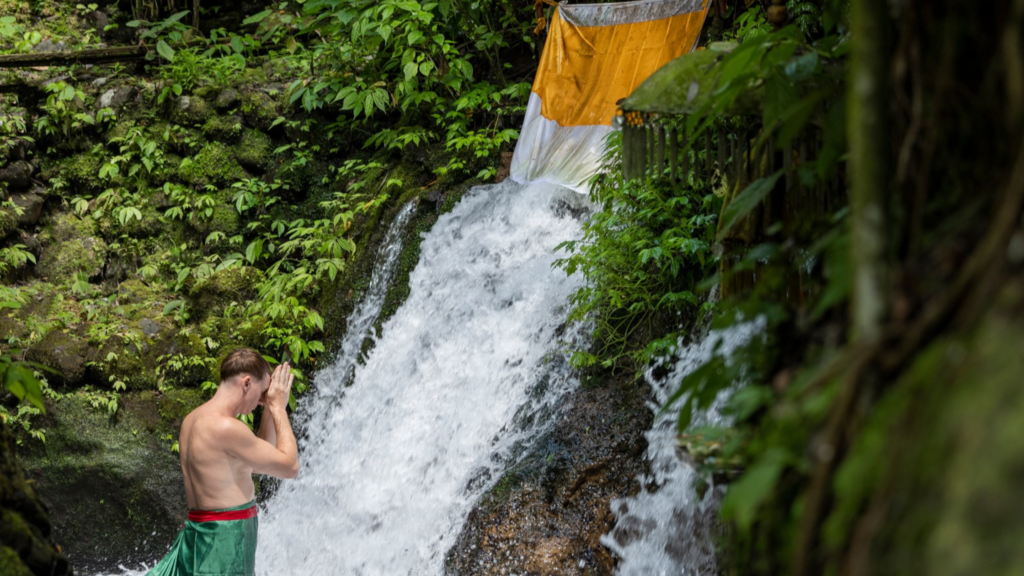
Why Is Pesiraman Dalem Pingit Considered a Sacred Place?
Beyond the changing water colours, Pesiraman Dalem Pingit holds an important place in the spiritual life of Sebatu Village.
Its significance is closely connected to the presence of sacred water, traditional ceremonies, and local beliefs associated with Dewi Uma and Dewi Gangga.
The site is also an example of the relationship between nature and spirituality in Balinese Hindu culture.
Natural springs, rivers, and waterfalls are often incorporated into religious practices because water is regarded as an important element of purification and spiritual life.
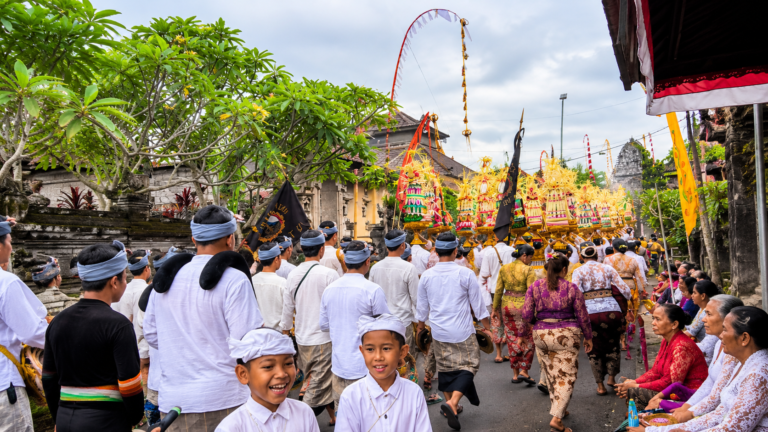
At Pesiraman Dalem Pingit, this connection continues through the Melukat ceremonies performed by devotees.
The sacred shrines, traditional offerings, and religious practices surrounding the spring reflect the community’s efforts to preserve its cultural and spiritual heritage.
What Should Visitors Know Before Experiencing Melukat?
For travelers interested in experiencing Melukat at Pesiraman Dalem Pingit, understanding the local customs is essential.
Here are several things to remember before visiting.
Wear Appropriate Clothing
Modest clothing is important when visiting a sacred Balinese site. Visitors participating in Melukat may be required to wear traditional attire such as a Kamen (sarong) and Selendang (sash).
Prepare Traditional Offerings
Offerings may include Canang Sari, Kwangen, or Pejati. Ask the local caretaker or an experienced guide for assistance if you are unfamiliar with the requirements.
Respect Religious Practices
Avoid speaking loudly, disturbing people who are praying, or treating the purification area as an ordinary swimming location.
Ask Before Taking Photographs
Always request permission before photographing religious ceremonies or local devotees.
Follow the Guidance of the Local Caretaker
The Melukat procedure and visitor requirements may vary. Follow the instructions of the Pemangku or temple caretaker throughout the experience.
Most importantly, approach the ceremony with respect and an understanding that it is a religious practice, not a tourist performance.
Frequently Asked Questions About the Changing Water Colours at Pesiraman Dalem Pingit
1. Why does the water change colour at Pesiraman Dalem Pingit?
According to local beliefs, the changing water colour during Melukat may be associated with the spiritual condition of the person undergoing purification. However, no definitive scientific explanation has been established for this phenomenon at the site.
2. What colours have been observed at Pesiraman Dalem Pingit?
Local accounts describe several appearances, including milky white, yellowish, reddish, and clear water. These variations have been reported by visitors and local religious caretakers.
3. What does white water mean during Melukat?
In local spiritual interpretations, cloudy white water is sometimes associated with the release of negative influences during purification. However, this is a belief rather than a scientifically established meaning.
4. Does the water always change colour during Melukat?
No. According to local accounts, the water does not always change colour. Sometimes it remains clear, and the reported changes may not be visible to everyone.
5. Is there a scientific explanation for the changing water colours?
There is no verified scientific study establishing the exact cause at Pesiraman Dalem Pingit. In general, water appearance can be influenced by suspended particles, minerals, organic materials, and lighting conditions.
6. When did the changing water phenomenon first become known?
According to local accounts, the phenomenon became widely known on 19 November 2007, after a foreign visitor reportedly experienced a change in the water’s appearance while bathing beneath the waterfall.
7. Where is Pesiraman Dalem Pingit located?
Pesiraman Dalem Pingit is located in Sebatu Village, Tegallalang District, Gianyar Regency, Bali, Indonesia.
8. Can tourists experience Melukat at Pesiraman Dalem Pingit?
Visitors may be permitted to participate in Melukat, subject to local temple requirements and guidance from the religious caretaker. Respect for Balinese Hindu customs is essential.
Experience a Traditional Balinese Purification Ceremony with Puri Gangga Resort
Learning about the changing water colours at Pesiraman Dalem Pingit offers a glimpse into the spiritual beliefs and traditions that make Sebatu Village unique. For travelers who wish to understand Melukat beyond its cultural stories, experiencing a traditional Balinese purification ceremony can provide a deeper connection to the island’s spiritual heritage.
At Puri Gangga Resort, guests can discover the meaning of Melukat through guided purification experiences at Sebatu Holy Water and Pura Gunung Kawi Sebatu.
These experiences introduce participants to the traditional stages of purification, beginning with prayer and setting a personal intention, followed by the sacred water ritual and a closing prayer. Guests are also guided on appropriate traditional attire, offerings, and respectful temple etiquette.
Whether you are interested in learning about Balinese Hindu traditions or seeking a meaningful cultural experience during your stay in Ubud, a Melukat ceremony offers an opportunity to appreciate the spiritual values that remain an important part of everyday life in Bali.
Discover the available experiences and learn more about the Balinese Purification Ceremony at Puri Gangga Resort.