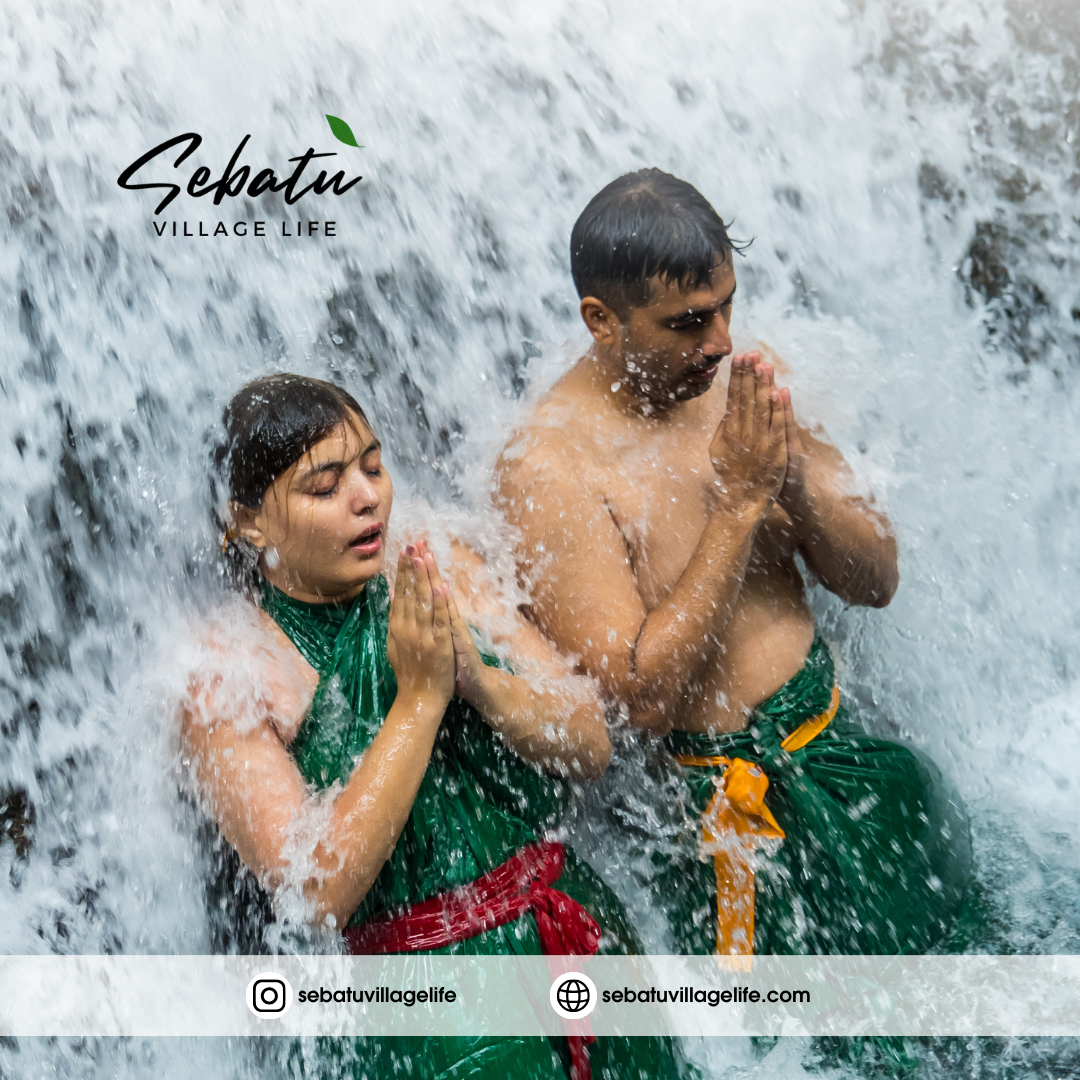

Balinese Ceremonies to Experience in Sebatu Village
Balinese ceremonies are not occasional events in Sebatu—they are the rhythm of life itself. In Sebatu Village, ceremonies mark the passing of time, the cycle of nature, and the relationship between people, ancestors, and the divine. Rather than being staged for visitors, these rituals unfold naturally as part of everyday village life.
Experiencing Balinese ceremonies in Sebatu Village offers a deeper understanding of Bali beyond temples and landscapes. It reveals how spirituality is lived, not displayed.

The Spiritual Rhythm of Sebatu Village
Sebatu Village follows a spiritual calendar guided by the Balinese pawukon and lunar systems. Ceremonies are woven into agricultural cycles, temple anniversaries, and family life.
On certain days, the village feels quietly festive—offerings appear at doorways, bamboo decorations line village paths, and the sound of gamelan music drifts through the air. On other days, rituals happen subtly, observed only by those who live there.
This rhythm gives Sebatu its distinctive atmosphere: calm, intentional, and deeply connected to tradition.
Seasonal and Annual Ceremonies in Sebatu
Throughout the year, Sebatu Village hosts a variety of seasonal and annual ceremonies. Each has its own meaning, timing, and form of expression.
Nyacahin (Wali Padi) – Rice Harvest Thanksgiving
Nyacahin, locally referred to as Wali Padi, is one of the most meaningful agricultural ceremonies practiced in Sebatu Village. Cultural records and village‑based writings consistently describe Nyacahin as a sacred expression of gratitude following the rice harvest—a moment when the community acknowledges the blessing of abundance granted through the land.
In Sebatu, the Nyacahin ceremony is traditionally conducted after the rice has been harvested and stored. Offerings made from newly harvested rice, flowers, fruits, and symbolic agricultural elements are prepared and presented at family shrines, rice barns (lumbung), and village temples. These offerings are dedicated to Dewi Sri, the Balinese goddess of rice and fertility, who is believed to safeguard both the crops and the well‑being of farming families.
Several local cultural sources note that Nyacahin in Sebatu can extend over several days, marked by a sequence of rituals rather than a single event. During this period, certain customary observances are followed, reinforcing discipline, gratitude, and spiritual focus within the community. The ceremony is not intended as a spectacle, but as a reaffirmation of balance between humans, nature, and the spiritual realm.
What sets Nyacahin in Sebatu apart is its close relationship with the subak irrigation system and surrounding rice terraces. Farming here is understood not merely as labor, but as a sacred duty carried out in harmony with water, soil, and collective cooperation. The ceremony reminds villagers that agricultural success depends as much on spiritual alignment as it does on physical effort.
Community participation is central to Nyacahin. Preparations often involve extended families and neighbors, reflecting the cooperative values that shape village life. Through this shared responsibility, Nyacahin strengthens social bonds while preserving ancestral knowledge passed down through generations.
For visitors seeking to understand Balinese culture beyond temples and performances, learning about Nyacahin offers valuable insight into how spirituality continues to guide everyday life in Sebatu Village—quietly, respectfully, and without commercial influence.
Related Reading: Aci Nyacahin in Sebatu Village

Mejarag (Nuuh Tradition) – Gratitude for Fertility
In Sebatu Village, the agricultural calendar is marked not only by planting and harvesting, but also by rituals that acknowledge the unseen forces sustaining the land. One such tradition is Mejarag, locally known as Nuuh, a ceremony performed after the rice harvest as a collective expression of gratitude and renewal.
Rather than focusing solely on celebration, Mejarag reflects the villagers’ awareness that fertility is a shared responsibility—between farmers, nature, water, and spiritual balance. The ritual is carried out within the village temple area, particularly around Pura Desa and Pura Puseh, where offerings made from seasonal produce are presented as a symbol of appreciation for the harvest that has been received.
The atmosphere of Mejarag in Sebatu is calm and grounded. Community members gather not as spectators, but as participants fulfilling a customary obligation passed down through generations. The ritual follows traditional timing based on the Balinese calendar, reinforcing discipline and continuity rather than spectacle.
Beyond the temple grounds, the meaning of Mejarag extends back to the rice fields themselves. Elements of the ceremony are symbolically returned to the land, reflecting the belief that the earth must be acknowledged and respected in order to remain fertile. This act emphasizes harmony with nature and protection against imbalance in future planting seasons.
Through Mejarag, Sebatu Village demonstrates how agriculture and spirituality remain inseparable. The ritual serves as a reminder that farming is not merely an economic activity, but a sacred relationship—one that requires gratitude, cooperation, and respect for the cycles that sustain life.
Piodalan at Pura Gunung Kawi Sebatu – Balinese Temple Ceremonies in Sebatu
One of the most significant Balinese temple ceremonies in Sebatu is the piodalan held at Pura Gunung Kawi Sebatu, a sacred water temple known for its role in purification and spiritual renewal. Piodalan marks the temple’s anniversary, celebrated according to the Balinese pawukon calendar, and serves as a moment of collective devotion for the village community.
On this day, villagers gather dressed in traditional attire, bringing carefully prepared offerings to honor the deities associated with the temple. Prayers are performed in sequence, accompanied by the subtle sounds of gamelan and the flow of holy spring water that gives the temple its spiritual significance. The ceremony reflects the belief that temples are living centers of balance, connecting humans, nature, and the divine.
In Sebatu, piodalan is not a spectacle but a sacred responsibility shared by the community. Families participate according to their roles, ensuring that the rituals are carried out respectfully and in harmony with ancestral traditions. For visitors who happen to be present, observing the piodalan offers a rare glimpse into an authentic temple ceremony rooted in daily spiritual life rather than performance.
Mepade Agung (Mepeed) Ceremony – Honoring Ancestral Spirits
Mepade Agung, often referred to as Mepeed, is a ceremonial procession that reflects unity, grace, and devotion within Balinese communities. In the context of Sebatu Village, this ritual is closely associated with major temple ceremonies such as piodalan, where villagers walk together toward the temple carrying offerings.
The procession is usually led by women dressed in traditional attire, moving slowly and gracefully in unison. Each step symbolizes harmony and balance, while the offerings carried represent gratitude and respect for ancestral spirits and spiritual guardians. The act of walking together reinforces the idea that spiritual journeys are undertaken collectively, not individually.
In Sebatu, Mepade Agung emphasizes communal harmony rather than display. The procession is quiet and focused, guided by prayer and intention. This tradition highlights how ancestral respect remains an essential part of village life, passed down through generations and practiced with humility.
Daily Rituals and Living Traditions
Beyond large ceremonies, Sebatu’s spiritual life is shaped by daily rituals. Small offerings placed at shrines, doorways, and temples are prepared each morning and afternoon. These acts may appear simple, but they represent constant awareness of balance between humans, nature, and the unseen world.
For visitors, witnessing these everyday rituals can be as meaningful as attending a major ceremony. They reveal that spirituality in Sebatu is not reserved for special occasions—it is a continuous practice.

How to Experience Sebatu Ceremonies Respectfully
While visitors are welcome to observe ceremonies in Sebatu Village, respect is essential. Dressing modestly, maintaining silence during prayers, and avoiding intrusive photography are basic forms of courtesy.
It is also important to remember that ceremonies are not performances. They are sacred moments for the community. Observing from a respectful distance allows visitors to learn without disrupting the ritual flow.
Approached with humility, experiencing Balinese ceremonies in Sebatu Village can become a deeply enriching cultural encounter.
Sebatu Village – A Living Cultural Heart
Sebatu Village stands as a reminder that Balinese culture is not preserved behind glass—it is lived, practiced, and renewed through ceremonies both grand and humble.
From seasonal harvest rituals to daily offerings, Sebatu’s ceremonies reflect a way of life rooted in gratitude, balance, and spiritual awareness. For those seeking an authentic cultural experience near Ubud, Sebatu offers something rare: a living tradition that continues quietly, faithfully, and meaningfully.
Learn about Sebatu Village Life Experience